Looking to improve your health with some alternative health technologies? I am selling an Ionic Foot Bath and a Full Spectrum Bright Light therapy lamp with details noted below. Just leave a comment and we will figure out things from there. Prices are US dollars and shipping is provided to the US only!
Ionic Foot Bath
Start your detox with this ionic foot bath! Includes unit, instructions, and a new array. Generic brand used about 12 times. Add your own basin of warm water and 1 t non-iodized salt. $75 USD price includes shipping. Purchase via Pay Pal. Works great but hey, sold as-is, no warranty. Cross posted!
Northern Light Technologies Full Spectrum Lamp
Enjoy the benefits of sunlight at your convenience with this full spectrum light therapy lamp from Northern Light Technologies. 10,000 LUX. New price is $230; asking $95 for Pay Pal purchase plus $20 shipping and special packaging = $105 USD. Unit is in excellent condition. Used about 20 times for less than 30 minutes total over a few years. Note slight paint chip near the on/off switch. Works great but hey, sold as is, no warranty! Will mail to street address. Cross posted. Link to the company provided for comparison: Northern Light Technologies.
In my profession of occupational therapy when I specialized in mental health, I often asked my patients to describe a typical day in his or her life. A practitioner can learn a lot by the presence or absence of structure to one’s routine among other characteristics. Someone who is depressed, for example, usually starts the day later with a disrupted sleep/wake cycle and has difficulty keeping a meaningful routine. The days often lack variety, physical activity, creative pursuits/hobbies, social activities, appropriate self care, and regular breaks (for sleep and relaxation). This can lead to a lack of satisfaction with how a person spends his or her time, an altered sense of identity in the absence of meaningful roles with which to identify, and can even erode the structure needed for at least part of the day that is needed to manage everything from daily habits (self care routines, for example) to emergencies. The person spends an extra amount of energy just getting through the day and the day lacks enjoyment as well. A person with an anxiety disorder or an addiction often presents with a completely opposite activity schedule generally characterized by chaos! Perhaps the mental health issues came first? Or was it the challenge of achieving a balanced lifestyle in one’s living dysfunctional environment that eventually compounded the issues? It was my job to figure out the answer these questions and to design an occupational therapy treatment plan accordingly.
I have written on the topic of time management before but not within this context. And not this personally. I’ll leave out the assessment forms, graphs, charts, comparison tables, high math, and excruciating detail that would afford me a truly cathartic experience but provide you with a very boring blog post! Perhaps this summary will be more meaningful than a formal occupational therapy evaluation?
This is what it is like to center one’s life around recovering from a serious illness.
Trying to get enough sleep to function: 10 hours per day
This includes time that feels wasted trying to fall asleep, waking and go-to-sleep convulsive episodes, recovery time from the latter of those two, ruminating if I should take nap or not during the daytime (increase the hours if I am too chilled/sick to make a decision), waking up in the middle of the night to use the bathroom, additional episodes trying to go back to sleep after getting up, waking up when my beloved is snoring post exhaustion from caring for me, more additional episodes trying to go back to sleep, bedtime preparations (donning the blue light-blocking glasses to foster melatonin production, experimenting with bedtime supplements, arranging pillows and other positioning devices to minimize pain, pre-heating the mattress pad heater to minimize the shock of cold sheets that can trigger seizure attacks), preparing my emergency “lunch” bag of waking supplements/water/snack (to manage blood sugar drops, dehydration, and remedies that sometimes help), struggles to enjoy nighttime snuggles with my beloved husband until the episodes start, and most definitely: talking to Jesus!
Medical appointments and treatments: 3.5 hours averaged per day across the week
Medical activities include appointments with my Family Practice Physician/Chiropractor, other Doctors and professionals, IV antibiotic treatments at the hospital 3x/week and recovery time before I can go home, transit time, scheduling, communication (phone, internet, text, and messaging), coordination of transportation when needed, various lab test procedures, detox treatments, pain management-related services, and preparing all food/records/water/supplements/detox materials needed for each appointment. “Treatments” also include various methods of detox; foot baths; salt/mineral baths; skin brushing; liposomal, topical and oral supplements; updating my daily treatment log; medical filing/billing; special nebulized and dissolved supplements; and an occasional use of essential oils. (For the past month I have had an average of 7 medical appointments per week! Eeeek!)
Food and nutrition 3.5 hours per day
Includes making dinner and lunches for my husband daily; making separate, special diet for myself every meal (!); shopping/ordering/freezing/processing groceries from 7 or more sources; planning (research and list-making); portioning-and-freezing (since no cooked food can be stored for more than 24 hours); recipe conversions/managing recipes; updating quick reference sheets of current protocols to keep myself sane and moving forward; and symptomatic adjustments as necessary.
Research and learning 1.5 hours per day
Online medical research dominates my thirst for both information and recovery. I also include here the review of professional literature and various publications, blogging about various health topics at http://www.justjuliewrites.com, and the investigation of various treatment approaches and providers via a variety of outlets including social media.
Socialization 2 hours per day
Whether connecting with my really smart and beloved spouse (Steve), texting/messaging/emailing friends, talking with friends or family on the phone, sending someone a card, or the rare chance I get to meet with someone in person, socialization is a highlight of each day! Skyping with a couple of gals regularly for prayer, scripture, some laughs and tears has become a treasure! Social isolation plagued me for about 3 years of these past four years of illness when I had to stop everything: Bible studies, church activities, womens’ retreats, visiting, most travel (when all of our family is out of State), etc. For a long time my most regular communication outside of our home was largely limited to superficial chats on Facebook! Many people have left my life . . . Thank the Lord for those faceless acquaintances on Facebook who were there when I was awake in the middle of the night!
Christ-centered activities 1 hour per day
Here’s another improvement in consistency that includes listening to our pastor’s messages online (since I cannot be in the building due to sensitivities), reading my Bible, prayer, some blogging, and the reading of inspirational Christian publications (ministry newsletters, etc.)
Extreme avoidance activities 1 hour per day
Extra loads of laundry, additional cleaning, wiping surfaces with a diluted ammonia solution, management of various masks, preparation of barriers to minimize exposures in public places, nasal washes, and a myriad of other activities not reflected above.
Physical activity .75 hours per day
This is the newest addition to my daily routine and comes in the form of more regular housework, walking our dog once per week, 10 minutes on a stationary bike once per week, and some gardening. This figure is divided by the total over 7 days: lately I can move around a little longer about 3 days per week for more than a few minutes in a row, yeah God!
Self care .5 hours per day
The time spent caring for myself has only recently increased to improve my appearance sometimes. It feels good.
Recreational and Creative Endeavors .25 hours per day
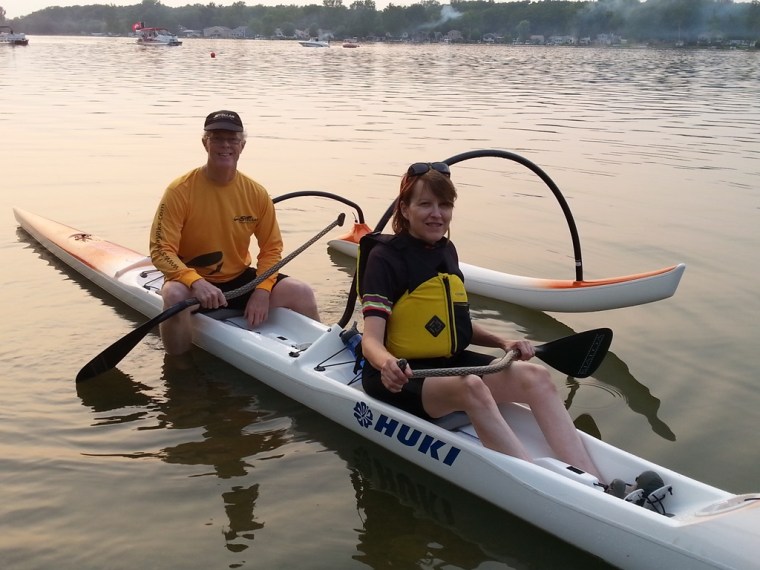
Herein lies my greatest weakness and greatest area of improvement since starting treatment for chronic Lyme disease. Until now there hasn’t been much fun: sewing was limited to mending (!); I couldn’t tolerate listening to music, was too sick for kayaking with Steve (my River Bear), and reading consisted only of my Fine Gardening magazine, my hubby’s war-hero novel, and a few monthly local gardening newsletters. I sold my jewelry business last Fall and my creative juices stopped as the illness got worse. Maybe this summer I will actually be able to work in the public garden for which I have volunteered? Stay tuned! Things are looking up! This past week I was able to work in our own garden for 3 hours: a very physical activity as well as something that I love!
So putting on my occupational therapy hat for a moment here is my brief O.T. Assessment:
The loose schemata above reveals my obvious need for more physical, non-medical self care, in-person social, and recreational/creative activities to achieve a balanced lifestyle. Incorporating other people into the ones that I am able to pursue will probably make everything more fun and meaningful in addition to increasing social time. Success will depend upon the ability to avoid noxious exposures until my reactivity goes down; gratefully we are entering into the warmer months here in the Midwest so doing things outside is more possible. As I eventually spend less time in medical and medical research activities, I hope to pursue more of a primary occupational role either by developing my Two Step Solutions business or returning to traditional employment in a suitable environment. Volunteer work perhaps at our local Extension Office may also increase. Keeping my occupational therapy license current, continuing to learn, developing some internet and e-commerce skills, and writing, Lord willing, are strengths that may add to the possibilities without too much additional retraining.
****************
I am grateful to my fellow sojourners who have kept me sane when things have been out of whack! I look forward to finding a way to give back to them and others; perhaps this would be by sharing how the Lord crafted this story or simply living a meaningful life after serious illness. I will definitely take the time I need to make a good transition knowing that there will be some good days and some that are less so.
Overall, can you hear the hope in my voice, Gentle Reader? Yup. Lord willing, I am getting well! JJ
I only had a few minutes to run to the mailbox before my friend would arrive to take me to the hospital this afternoon. Elle loves to “get the mail,” so I summoned her and we were out the door on this sort of warm, Spring day. The junk mail in that box got me outside! I would be indoors for most of the afternoon and evening with treatment and waiting on my ride home. Thank you Lord for this wiff of fresh air!
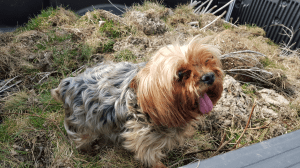
Wiff indeed. Or is that woof? With the envelopes and flyers still in my hands, I turned around to see Elle in what you might call the “pointer” pose of a hunting dog. She is a German shepherd yet I know that pose means that something is awry. Her head dropped as her eyes fixed on her prize: a bunny? a squirrel? Nope. A puff ball! Elle had spotted a light brown-and-black ball of fur no larger than a 16″ softball sauntering toward our driveway! That little renegade was out for a stroll, strutting like she was the queen of the court! Elle waited for my command to advance for the customary sniffs and shoves of yet another potential playmate. But hey, I would have to leave in another few minutes and there was no one else . . .
Just then my friend, Jane, drove up in her mini van. I had scooped the ball o’ fur into my arms and was trying to figure out what to do. Jane immediately jumped out onto the driveway ready for action. She has 2 Pomeranians and LOVES little dogs! I placed Rene into the bed of my truck for a moment (still filled with soft pieces of sod from a late night gardening project 2 weeks ago!) while I ran into the house to get my phone. I would need to notify our housing addition in hopes of a quick reply from her rightful owner. Unfortunately, no such luck bequeathed us this day . . .
Jane and I figured out a plan to place Rene in a garden pen in my backyard until I could return home in a few hours. The Yorkie would have a towel-bed, bowl of water, and plenty of room to roam around surely before the rains came, right? Yes, no worries! The only problem was that our hopes that the owner would come forth never materialized. I hung tight to my phone during my afternoon treatment and the only person who responded to my post on our Association’s Facebook page was the owner of another Yorkie. Katie could keep our little Rene overnight and take her to the vet tomorrow during her own dog’s vet appointment to check for a chip ID. And so that’s what we decided to do.
Later that night I heard that Rene was adjusting well with her new roommates with a belly full of Yorkie foodstuffs. No one came forth on behalf of the old gal even from my post on the adjacent housing addition’s Facebook page. Oh dear. I guess Jane, Katie, and I will figure out what to do by tomorrow afternoon.
In the meantime, Steve and I had a great laugh. Neither of us are “little dog” people. That puff ball huffed and puffed, snorted and sneezed almost continuously! Jane said that she was probably the pet of an older person who fed her too much, causing all of the wheezing sounds. Good golly! Her fur was mottled, eyes caked with gunk, and body odor suggestive of the risk of nervous piddling (which are exactly the things that are yucky to me about little dogs!) Steve joked about Rene making a great snack for Elle. Whaaat? Rene was quite fat and would add too much cholesterol to Elle’s diet, he conceded. So maybe not. Oh my!
It’s a good thing that Steve wasn’t home when I found the little brown and black puff ball that sauntered up our driveway this afternoon! Us gals did the right thing and little Rene brought us all some smiles on a day definitely in need of a few. Lord willing we will find her owner soon. In the meantime, carry on everyone. :JJ
UPDATE: After a night at Katie’s doggie B & B, trip to the vet, and her owner’s little girl confiding to a friend on the school bus that her doggie was lost, Nikki is home! Woofie, woofie, snort, snort!
The level of sunlight raises up then down in the hallway beyond my bed
Like a child playing with a dimmer switch, how I know where these thoughts have led!
How can I get up and face the world one more, yes one more day?
When so much suffering met me here or there, no matter where the level of light has shone along the way?
Still one cannot judge the next moment based upon the past…
You just cannot predict when joy, when peace, when hope will come at last?
Simmer down inner child and let the sovereignty of your Lord speak.
You must remember how He delivered you in the past when you were so weak.
Your fears, your toils were measured by My drops of blood while I hung on that cross
I saw, I see, I weep, and I am always right there when you feel lost.
Hitch your heart to Mine choosing faith that freedom will come in due time
Watch for My answers, My leadings, My deliverance some now, some beyond a simple rhyme.
There is hope. There is more. There is a heaven, I promise as I know you have seen.
Walk towards My light dear one: what’s coming is greater than what has been . . .
Friday’s perspective:
In time the beatings diminish
And you catch your breath to finish
The week that held too much, oh dear
Gave way to Friday and better news to hear.
Things moved forward: medical tests and even some healing
Living more in the facts by golly with less in the “fearful feelings.”
I might even go out soon: making plans for the days ahead Lord willing
Better get the pup. It’s time for a ride to pick up the bacon, the drugs, the groceries: excuses good enough to put off another day the cleaning!
May the Lord bless your weekend, Gentle Reader. JJ
Here’s a little ditty on Lyme disease that I wrote and was published in the Spring 2016 issue of Canoe News (for the United States Canoe Association). As it goes to print I just wondered if it may help someone out there? Take care Gentle Reader, JJ
Lurking in the tall grass
by Julie Horney
Somewhere out there by the side of the river, next to your boat–mobile or behind the garden shed may be a menace that could change your life forever. You may see it before it gets to you and you may not. It may be no bigger than the period at the end of this sentence! Perhaps you have been bitten many times before and think you are immune to its wrath. Maybe. Maybe not. One day that could all change so take heed: this message applies to EVERYONE!
Lyme disease is the fastest growing infectious disease in the U.S. Lyme has been reported in all 50 states although it is most prevalent in the Northeast, Northwest, and Great Lakes areas. The Centers for Disease Control and Prevention reported that there were 300,000 new cases in 2012 and estimates based on clinical diagnosis suggest there are over 1 million new cases yearly.*
Lyme disease (LD) is called a “vector–borne” disease transmitted by the bite of black–legged deer tick imbedded with the Borrelia burgdorferi (Bb) spirochete. LD is often complicated by Co–infections: other bacteria, protozoa, and viruses carried by the same ticks. Lyme is difficult to diagnose because fewer than half of all patients recall a tick bite or develop the signature erythema migrans (bull’s–eye) rash; the routine Lyme ELISA screening test has up to 60% false negativity. Similarly, testing for co–infections is also plagued by a high rate of false negativity. For example, research by the International Lyme and Associated Disease Society (ILADS) finds that joint swelling typically occurs in only 20% to 30% of patients. Given the prevalent use of over the counter anti–inflammatory medications such as Ibuprofen, joint inflammation is often masked. Based on these statistics, a significant number people who contract Lyme disease are misdiagnosed during the early stages leading to a chronic form of the disease which can prove even more difficult to diagnose and treat.
Lyme disease is often referred to as the “great imitator” because it mimics other conditions, often causing patients to suffer a complicated maze of doctors in search of appropriate treatment. While it may not be fatal, the consequences of Lyme and Co–infections can profoundly affect the quality of your life. In the words of my own Lyme Literate Medical Doctor (LLMD):
If you don’t treat it then your life will be hell.
Alright so now that I have your attention, let’s dig into the details. Isn’t there a difference between an acute infection and a chronic infection? The answer is yes. And since only an estimated 50% of ticks carry infection, how do I know that I have been affected if I do not have any symptoms? Lyme disease is difficult to diagnose without a rash, Bell’s palsy, arthritis, or meningitis but you can still have Lyme and not have any of those signs or symptoms! Many people react differently to the infection and experience fatigue, headaches, irritability, anxiety, crying, sleep disturbance, poor memory and concentration, chest pain, palpitations, lightheadedness, joint pain, numbness and tingling. The key is in the careful medical evaluation of ANY suspicious insect bite since they are all capable of spreading disease. (The CDC has stated that mosquitos can carry Lyme disease.)
The diagram below shows the proper procedure for removal of an attached tick.
Removal of a tick from the CDC website****
Using fine pointed tweezers, grasp it from the side where it meets the skin, and gently pull it out in the opposite direction from which it embedded. My husband, Steve, and I each carry a pair of tweezers in our vehicles in addition to a First Aid kit for this purpose.
While the longer the tick is attached, the higher the risk of transmission, it is possible to get Lyme disease even if the tick is attached for less than 24 hours. The salivary juices of the tick, which contain anticoagulants, anesthetics, and immune suppressors, also contain microbes that can be injected at the time of attachment. (The anesthetic is why you don’t usually feel it biting you!) Transmission of bacteria by ticks attached less than 24 hours has been well documented in animals and a study published last year documented that this can occur in humans as well.*
Taking a “wait and see” approach to deciding whether to treat the disease has risks. If you do experience symptoms, you may even need to have more than one doctor evaluate them. Onset of Lyme disease symptoms can be easily overlooked or mistaken for other illnesses. Once symptoms are more evident the disease may have already entered the central nervous system and could be hard to cure. This is one case in which an ounce of prevention really is worth a pound of cure. Work with LLMD to identify the appropriate treatment option if you have symptoms and if those symptoms persist. There is more than one type of antibiotic available, often beginning with 20 days of Doxycycline or Amoxicillin. Longer treatment is also an option per guidelines at http://www.ILADS.org
Prevention
Strategies for the prevention of tick bites are do–able even for the avid paddler who finds himself standing in endemic areas on a regular basis! First and foremost avoid known infested areas and keep to trails, boat launches, and areas cleared of brush/grass/bushes. Next, invest in clothing treated with permethrin or treat clothing 24 to 48 hours ahead of time with permethrin (which is waterproof through several washings) including paddling shoes. Tucking light–colored leggings or pants inside socks or fitted ankle–high water shoes can be helpful; tucking shirts inside pants is also recommended. There should be no gaps in clothing such that skin is exposed.
An insecticide containing DEET is the standard repellent to use. The Centers for Disease Control maintains that repellents with the active ingredient of picaridin or oil of lemon eucalyptus are as effective as DEET for mosquitos but make NO CLAIMS for their effectiveness against ticks. Similarly, the EPA registers several essential oils and other natural remedies for safety but not effectiveness! Limited alternatives are available by searching their site.** Assist children in the safe application of all insect repellents and skin checks too. And do remember to protect your pets: dog and cat fur can act like a “tick magnet” carrying ticks inside your home. Consult with your veterinarian about tick–protection for your pets throughout the year.
When outdoors, periodically inspect your clothing and skin for ticks. Wearing light–colored clothing will make tick identification easier. Brush off those that aren’t attached and remove any that are with the method noted earlier. Some keep an adhesive–style lint roller handy to pick up loose ticks on clothing or pets. Once you are home, take a shower right away. This will wash away unattached ticks and offer a good chance to thoroughly inspect your skin. Feel for bumps that might be embedded ticks. Pay careful attention to hidden places including groin, armpits, back of knees, belly button, and scalp. This may seem strange but a quick skin check when sitting on the potty can be done anywhere, right?
Why bother? A Quick Story
Perhaps it was the tick Steve removed on me about 6 years ago or maybe it was the zillion mosquito bites I’ve had over the years that caused my four years of hell with Chronic Lyme Disease? We are not sure. At first we thought that when I got really sick it was the consequence of a biotoxin illness (exposures to blue green algae–infested water when kayaking then mold at home). For four years I sought medical advice from traditional, functional medicine, and alternative health practitioners; we spent tens of thousands of dollars out of pocket to no avail. We found secondary issues to resolve that often go along with what becomes a “chronic illness” such as mercury toxicity, Candida, parasites, dental issues, food sensitivities, hormonal issues, and more. Several doctors gave me a psychiatric diagnosis; others attributed it to “fibromyalgia.” Oy vey!
Convulsive episodes every day for 2 to 5 hours has created a living hell for both of us. Sometimes the seizure attacks are triggered by environmental toxins or fragrances and other times it’s the simple act of going to bed or waking up in the morning. The thrashing has created secondary orthopedic injuries that require their own treatment. Relief is generally temporary until the next round of torture coming within hours. I had become largely homebound with a litany of noxious symptoms and until recently, bedbound for most of the day, a minimum of four days per week. Extreme dietary measures including a ketogenic diet did nothing. Family visits still require extreme avoidance procedures.
Less and less was I able to cheer my beloved River Bear by the shores of the waterways here in Indiana . . . “gooooo Steeeeve.” I thought that my paddling days, ability to work, and ability to function normally at all were largely over. Welcome to late stage, neuro Lyme . . .
Tis funny how nothing is wasted for those who believe in the Lord’s sovereignty over one’s life. Initially I did have 5 weeks of antibiotics for a “clinical diagnosis” of LD even though virtually all of the fancy lab tests were negative. That first round of treatment in 2012 nearly killed me. I decided it wasn’t for me. But after treating all of those other conditions over the subsequent 5 years I would eventually become ready for intensive treatment of chronic Lyme disease with high doses of IV antibiotics.
At the time of this writing I am about 3 months into treatment. Placement of a power port by cutting into my chest wall was needed when the treatments got complicated. Neat huh? And at last there’s good news: the big turn–around has begun! Praise the Lord I am getting well!
Fellow paddlers, please take the prevention and treatment of Lyme disease seriously! Chances are good that someday this will touch the life of someone you know. Let not my experience be wasted! Share this information with your friends and family. Take precautions then let’s get on down the river, the beach, the intercostal waterway to enjoy the sport we love.
Perhaps soon you’ll see me as the one in a Stellar SR Multisport. :JJ
*Source: International Lyme and Associated Disease Society at http://www.ILADS.org



 Jesus is for the Wounded
You must be logged in to post a comment.